What a director's treatment should explain
Reference images can establish a mood, but a useful treatment also explains the filming decisions behind that mood. After the script is agreed, ask how performance, camera, sound and editing will make the story understandable.
Published: 2026-10-11
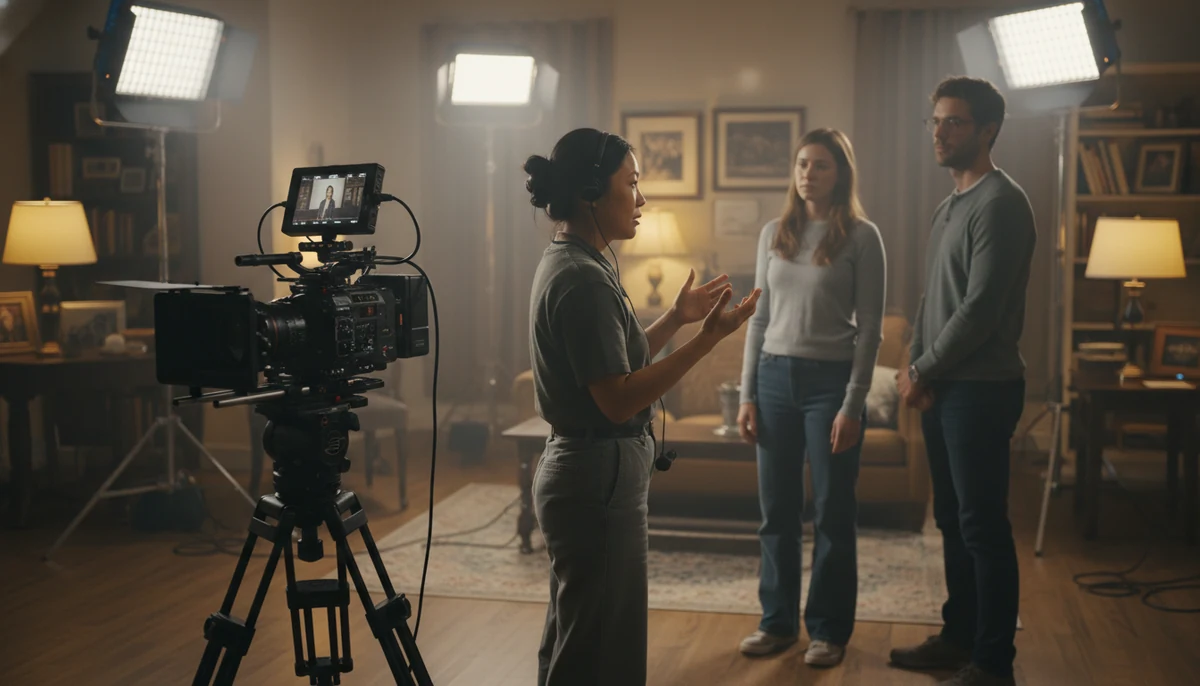
Reference images can establish a mood, but a useful treatment also explains the filming decisions behind that mood. After the script is agreed, ask how performance, camera, sound and editing will make the story understandable.
Connect each reference with a decision
Who is the audience following? What does a particular shot reveal? Why does the camera move or remain still? These questions turn a mood board into an approach the crew can execute.
Discuss sound and editing early. A pause, off-screen action or change in rhythm may carry information that is not visible in a still reference.
Give feedback against the film's purpose
Identify the scene and the intended effect before suggesting a change. If a product is difficult to recognise, discuss the relevant framing or action rather than asking for the whole treatment to become more exciting.
Record the choices that are settled and the ones that still need testing. The treatment should leave everyone with a shared understanding of how the agreed story will be filmed.
Planning a film? Contact Kanon Film in Shanghai to discuss your brief.
WeChat: 18121248012 · q1210865781@gmail.com