Showing product use without an on-screen actor
Objects, placement and visible changes can establish a believable use situation without showing a person. First decide what the audience needs to understand and why an actor is unnecessary for that story.
Published: 2026-10-19
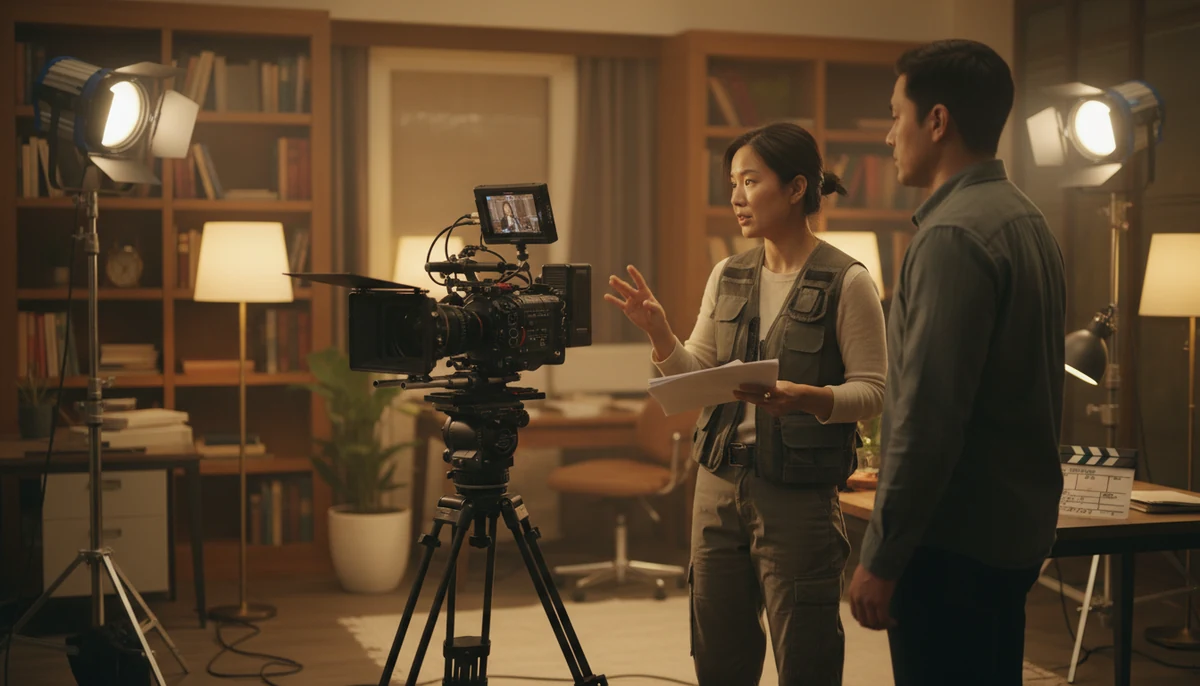
Objects, placement and visible changes can establish a believable use situation without showing a person. First decide what the audience needs to understand and why an actor is unnecessary for that story.
Let the setting explain the action
A hypothetical desk-organiser film might show scattered items, the organiser and the same desk after tidying. Keep the product, objects and camera position consistent enough for the viewer to understand what changed.
Check that the objects genuinely fit in the product. Include a complete view so the audience can identify what is being advertised, rather than seeing only attractive fragments.
Separate creative movement from real functions
Stop-motion or generated movement can be a useful visual device. It should not imply that a product sorts, cleans or operates by itself if it does not.
Ask someone outside the creative discussion to watch the rough cut and explain the product and its function. If they infer an unsupported capability, locate the shot that created the impression and revise it. Repeat the check with sound and without it.
Planning a film? Contact Kanon Film in Shanghai to discuss your brief.
WeChat: 18121248012 · q1210865781@gmail.com