Five questions to ask when a production company shows you an AI test
Check what an AI test proves, how it was made, how it matches the product and what remains untested before approving production.
Published: 2026-11-13
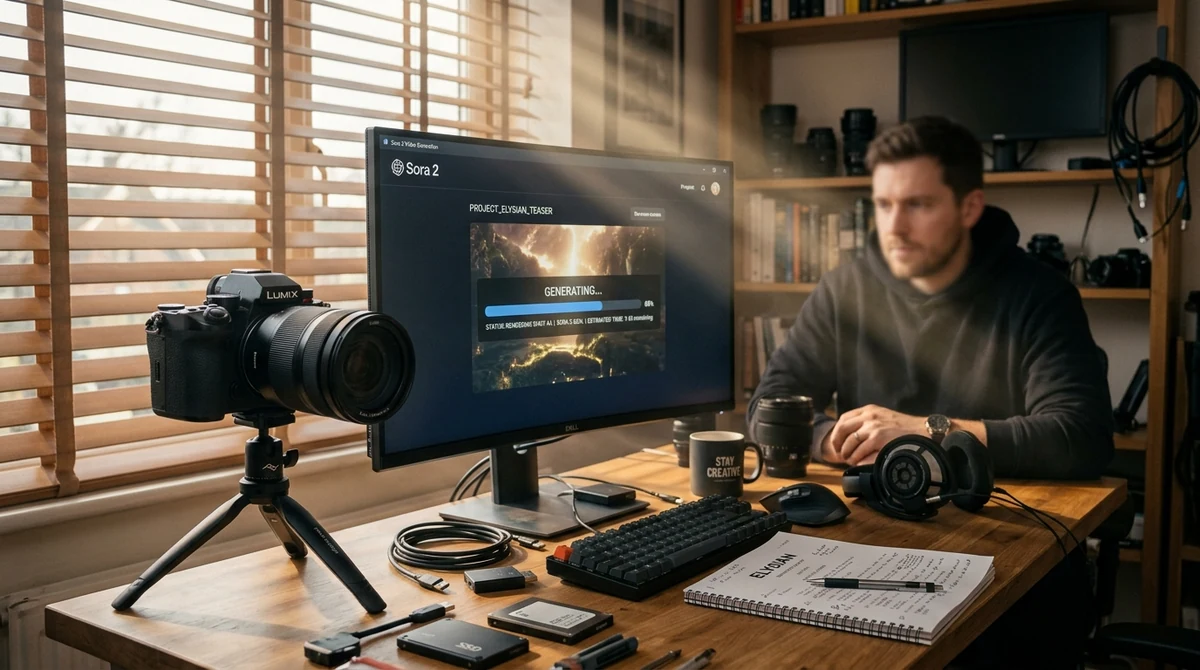
When a production company presents an AI test, ask what it has established before deciding how good it looks. It may demonstrate a mood, or test a product’s shape, an action or a transition. A polished still does not establish that a complete movement, brand information and final delivery will work. These five questions help decide whether to continue testing, adjust the idea or use another production method.
1. What is this test intended to establish?
Ask what the proposed shot does in the finished film: is it a mood reference, a transition idea, a product presentation or an explanation of a specific function? Define the acceptance criteria for this round. Which approved reference should the product outline match? How much of an action must be shown? Does the brand text need to be clearly legible? Different purposes need different checks. “It looks premium” is not enough to decide whether the shot is ready for production.
2. What are the image’s components?
Identify generated material, live-action footage, 3D work and compositing, including any product images, packaging artwork or other references supplied by the brand. The tool name alone is not the answer. Establish responsibility for each part and the information the client must confirm. If a bottle, label or hand movement has been adjusted in post-production, say so. A concept composite should not be mistaken for an unprocessed final result.
3. How has it been checked against the actual product?
Specify the product model, version and approved files, then ask to see how the test corresponds to them. When reviewing proportions, packaging text, cap structure, accessories and colour, point to the relevant shot and area. Identify what still needs confirmation from the product team. Here is a hypothetical example, unrelated to a Kanon Film client or real product: in a rotating bottle presentation, check the front label, the cap connection and the outline as the bottle turns sideways. If the final label has not been approved, mark its text as pending. A demonstration image cannot replace the final packaging file.
4. Does it still work in continuous playback?
Watch a continuous sample that includes the beginning, development and end of the action, then play it with the preceding and following shots. Check for changes in product shape, unstable lettering, implausible hand contact and inconsistent lighting or space. If only a still has been tested, identify the movements that remain untested. For a high-risk section, ask for a practical alternative using additional filming, 3D work or a simpler shot, rather than a general promise to fix it later.
5. What happens after the test passes or fails?
Before production, record the shots covered, output files, revision rounds and approval stages. Include the material the brand must provide, unresolved risks and the alternative approach if the test fails. The schedule and staffing should reflect that work. Confirm whether different aspect ratios, separate subtitle files or editable assets are included. A single sample does not establish the schedule or workload for an entire film.
Put these questions in a one-page review record and label each item “verified”, “awaiting material”, “needs another test” or “use an alternative”. Keep the corresponding sample version. When comparing teams, use the same proposed shots and product information, and check their explanations against the actual samples. Resolution and demonstration speed alone do not settle the decision. An AI test helps reveal suitability and risk early; it does not automatically prove the final film’s quality, product capabilities or project results.
For the distinction between a mood reference, technical test and product demonstration, see three kinds of review in an AI concept film. If the launch date is fixed, see planning technical tests for a new-product commercial.
WeChat: 18121248012 · q1210865781@gmail.com